
Write or Die
This Land Is My Land

I want to write. I need to write. Writing is my “raison d’être.” And yet…I am distracted by the everyday politics of staying alive, much less thriving, in this world in which I find myself. My answer to the dilemma is that I must write what is on my mind. I am writing for myself, while praying you, my supporters and readers, find something in it for yourselves. Perhaps you will find a word, a phrase or paragraph that inspires you to write whatever it is that keeps breaking your resolve to create. On more difficult mornings, I hope it will help you rise and continue to fight the good fight.
I live in a neighborhood in Swannanoa, NC. We are an unincorporated town, just outside the city limits of two heavily touristed cities; Asheville to the west, and Black Mountain to the east. We are dependent on Buncombe County for waste removal, water, electricity, sewage, police protection, and for help enforcing codes in this little working class village established in 1778 along the banks of the Swannanoa River. Of course, this is white man’s history. The Cherokee were here and happy long before us. Swannanoa came from their language, meaning “beautiful waters.”
Our claim to fame came late, when Helene hit and the river swept away infrastructure, homes, businesses, lives and livelihoods. You saw the destruction on TV when we had no power to see what you were already watching. Swannanoa is a town without a mayor, without a city council, and without a county who gives a damn about most of the people who live here. They care only when citizens of white privilege, or members of their own good ole boys network, call with a need for some intervention or protection.
Whether the wealthier inhabitants are escaping the heat of warmer climates like Florida, or whether they own homes leased for summer rentals high in the hills, when the privileged call the county, shit gets done. The problem is that they only call when it serves their interests. These folks know that they, and the people who rent their houses for summer vacations, will all be going to Black Mountain or Asheville for food, bars, and entertainment. They have no reason to call on behalf of the actual citizens of Swannanoa, who pay their more-than-fair share of Buncombe County taxes.
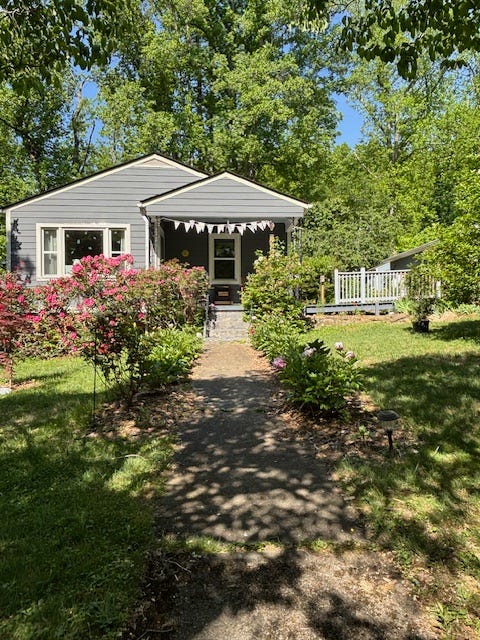
That’s the big picture. There’s a smaller photo wrinkled and ripped at the edges in the back pocket of my jeans. Maybe I’m a sorry neighbor. Admittedly, I never really wanted to live in a neighborhood, any neighborhood, after 25 years living on small farms of 3-5 acres. Three to five acres gives you a lot of breathing room. There’s room for error, both yours and those of your not-so-close neighbors. The trouble is that you have to live “out” to find that kind of land now. Even one acre is almost unheard of in Western North Carolina cities and towns, unless you have a LOT of money. For instance, my 700 square foot home is located on .25 acres and I am 8 miles from Asheville. I left the farm for health reasons. The road to Asheville healthcare is long and winding when you drive from Yancey County. The commute consumed both my internal and external resources—time, energy, and fuel. I needed to live closer to the VA, my friends, and providers. My partner and I were divorced after twenty-five years together. I needed a new home. I landed here. I was sixty-nine years old.
Looking for an affordable home in the Asheville area is not easy for a single woman on a fixed income. I looked for months on end, and I had good realtors. Six months passed before stumbling on this quarter acre and tiny house, which needed thousands of dollars’ worth of work to top off the already high ticket price of $335k. That’s a lot of money for a small house in a tight little residential area in a town Ashevillians derisively label SwannaNowhere. That’s okay. Recently I heard a local refer to the “big city” as TrAsheville. I had to laugh, although in my heart, I hate the divisive nature of these stupid labels.
My house was built in 1952, and the parcels were poorly drawn in rectangles, long and narrow, slanting to the north at the back. They way they are drawn creates and optical illusion. The way the lines were drawn gave me nearly five feet of land on the south side of my house. I did not know this when I bought it.
My neighbor, who owned the house at the time, failed to inform me of the exact location of the property line. As a first time lone home buyer, I assumed it ran in a straight line from the stake at the front down the middle between us. The plat I received did not show the distance between my house and his. It was still too close for confort, I thought, as I stared out the side windows at his roof. But he was friendly and so accommodating, at first. Besides, there was all that gorgeous state-owned woods across the road (a portion of which he cleared to make his own private parking lot). Behind the house a sweet creek chuckled on the far side of two gigantic tulip poplars. Ignorance and a limited budget carries a heavy price. I learned much later, the hard way, that I should have had the property surveyed before I bought the house.
Helene destroyed the man-made structures and infrastructures of the poorly developed land along the rivers and streams of Western North Carolina. Working class people and farmers in every county suffered. Swannanoa was no exception. I was “lucky.”
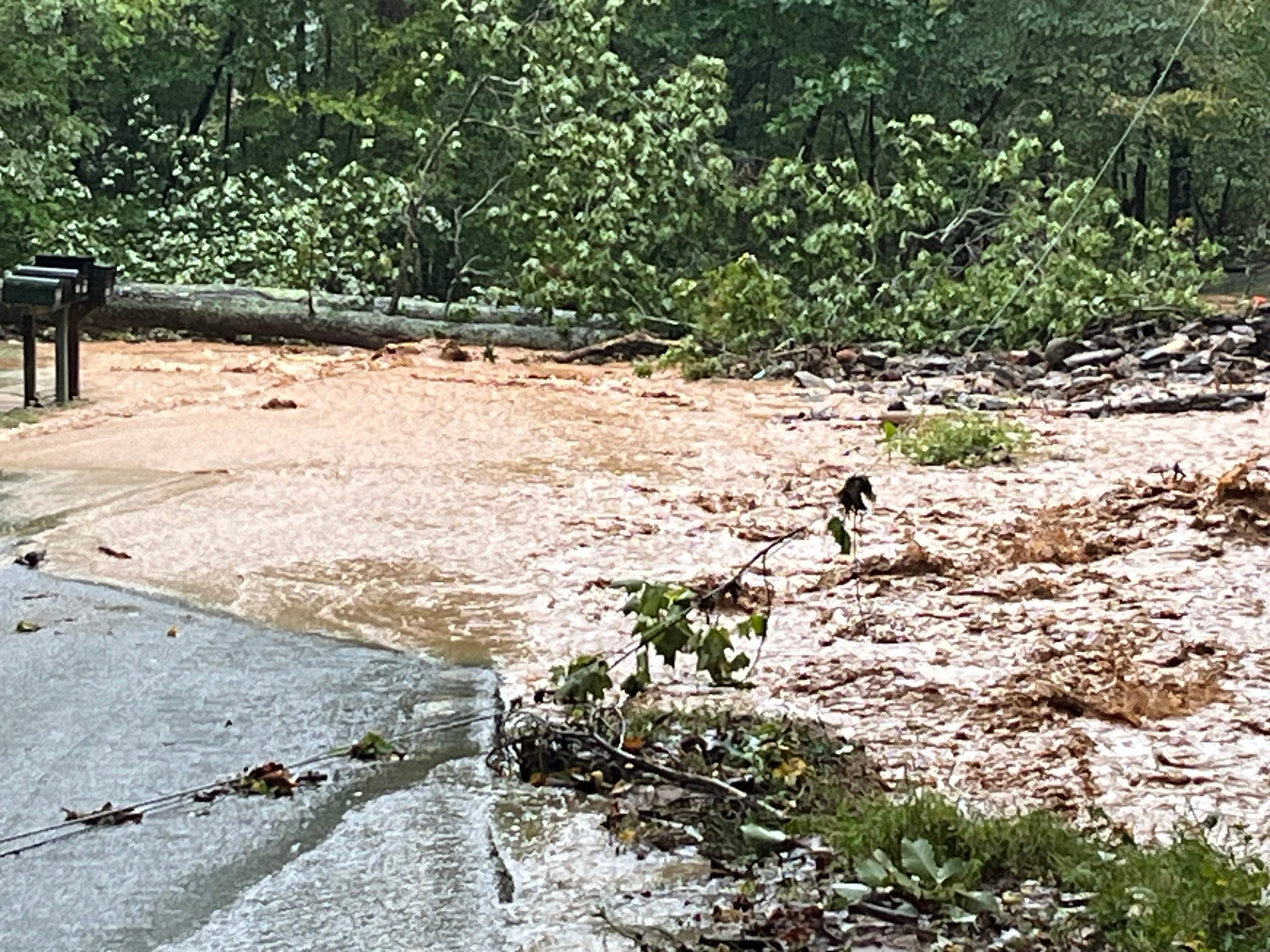
The landslide across the street took out the old 4-H Club cabins and camp. Trees fell across the road so that we could not drive out. The roads became rivers and fell apart. We had no electricity, no internet, no phone service for weeks. There was no potable water for months. Many of us still buy our drinking water. The sewer lines are undependable. The reconstruction rule seemed to be that if tourists overran your particular district in summer and on holidays, your section of the county would be rebuilt as quickly as possible. Lines were drawn according to income. Asheville, Weaverville, and Black Mountain were first served. The poorer counties and towns would wait…and wait…and wait.
The little row of five houses that comprise my “block” were all built by the same woman architect back in the early 1950’s. Four of them held tight. No trees fell on the our houses. Built on a knoll, on the upside of the mountain, only our crawl spaces and basements shipped water. We were dry and secure in the darkness, in our isolation, as we worked to provide water to drink, dipped from the stream to flush toilets, procured ice for coolers, and salvaged all we could from our refrigerators. Volunteers and the government, which would remain in place for many months, arrived to help. We stood by one another, and the lucky ones lent their hands to the less fortunate, who outnumbered us.
The rock and mud slide that destroyed Shepherd of the Hills retreat right across the street from my house, remained buried in rock, mud, and rubble until this Spring. I sat on my morning porch during March and April, sipping coffee, listening to boulders bang into the backs of dump trucks to be removed, nineteen months after the hurricane. The whining and grinding of giant wood chippers overrode birdsong as workers disposed of wood and timber debris. Heavy equipment dug, smoothed, scraped until it resembled the lawn from before the storm. Men seeded grass. The dining hall, however, remains in a heap of kitchen debris. Stoves, electrical wires, shelves and sinks hang from blown out windows like sailors crying for help from a sinking ship, which is exactly how I feel when I call the county with any problem or code violation I encounter.
Every day I thought, Didn’t we already endure this racket once? Last October I was present when a crew showed up next door to dig a moat for my neighbor. He said he was having a French drain installed, that some guys with a trencher might be working for a couple of days. He then conveniently left town while his crew arrived with a huge backhoe to tear up the ground between our houses, pulling boulders from the slope which destabilized my HVAC. More noise and nowhere to go. They worked right outside my living room windows for ten days.
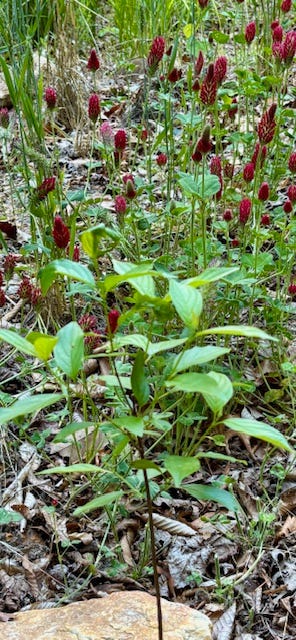
As wounded as the river remains, when it rains the Swannanoa cleanses itself once again, soothing the long memory of her injuries, refreshing itself in the slow flow of days. The scars on the sides of the mountains bloom with trillium and wildflowers, as time and weather break down timber debris into soil where mushrooms emerge. Boulders and stones find new homes and settle in for the long haul. I have great faith in this land to rebuild itself. It has done so a thousand times before and it will do it again. I am not sure about the people. If we in WNC are any example, the ability of mankind to come back from disaster is not the same as the Earth’s. So much of our infrastructure is built on fear and greed, and these are unsustainable for a hopeful tomorrow.
Shaken to the core, the men seem to cope by doing one of two things. They wanted returned what Helene took from them. Hundreds restored their property exactly the way it had been before it was ripped away or buried beneath swaths of mountain slides. They rebuilt on the same sites, flattened it all out again, jacked up their houses, and placed trailers on stacks of concrete blocks. When a river carries modular homes, automobiles, great tanks of gas or diesel, and eighteen-wheelers into far-reaching counties, I have to wonder what will happen to those concrete blocks when the next hurricane hits.
Some houses have been reconstructed, although Swannanoa’s major grocery store, Ingle’s, has not even pretended to rebuild. The store sits empty while the owners refuse to sell the land to another chain. It’s a ghost grocery, a sprawling corpse on a white autopsy table, taking up space while the lot gains in value. We have no post office. We have no hardware store anymore. Whitson bridge, the main traffic artery across the river into residential Swannanoa, took an entire year to rebuild and is now operational, but the banks of the river and the buildings that stood there continue to crumble down the banks nearby. Their remains stand in great piles of concrete rubble and steel girders, constant reminders of how much the county cares, a metaphor for the state of the nation.
The second response, with which I’ve grown all too familiar, is the tendency to overreact. The ones with money, or those who knew exactly how to work the system, did so without conscience. They wrangled insurance companies, FEMA, used SBL’s to upgrade houses that needed it long before Helene. They knowingly committed fraud while using volunteers to rebuild their businesses. The less fortunate, those who could not unlock the secrets to getting a reluctant government to act, stood in long lines to be advised by FEMA that they could get a $750 food allowance. If you lost a house, you might be offered $40k to replace it, but only if the entire neighborhood would sell. (I told you how much my little house cost.) If you lost a person; well, I have no idea if dead loved ones brought a dollar value at all. An awful lot of people who lived in flood plains, that never had been called that before Helene, had no flood insurance. Many had no insurance at all. Men with plenty, at least in comparison, those who had been lucky, cheated their way into repairs that were not caused by Helene. It was a great opportunity for good old American ingenuity, advantageous to those who don’t mind stealing from the poor to give to themselves.
Many men built great rock-filled moats around their houses. They trenched out wounds in the earth to save their roads, leading all the water into the waterways below, to flood some neighbor downstream. These choices directly contradict the actions of most people when disaster first struck. We helped each other, comforted one another, provided food and water to those without. Nobody talked politics or stayed within the lines of America’s own caste system. Now, they don’t seem to give a damn what happens to their neighbors, as long as their own home and property is protected.
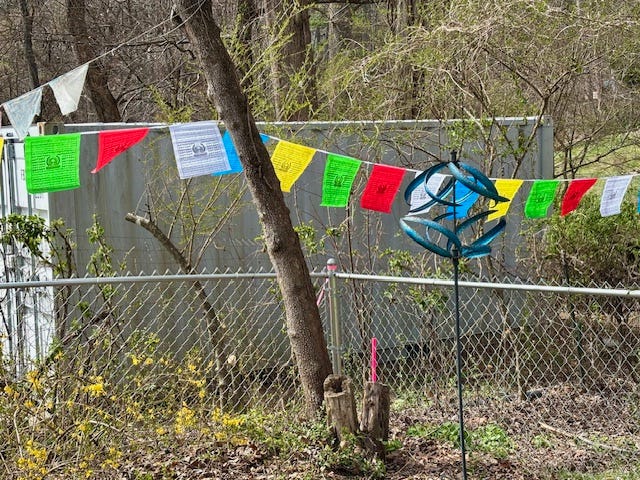
My neighbor dug his moat, then moved a shipping container into my view shed, effectively blocking out the forest and creek to my left. A local contractor stores his unused building materials on the far side of the creek behind my house. It was an unsightly trash pile for years, draped in white plastic tarps. I hung prayer flags to distract me from its presence there. Helene washed the road into our creek, scattering ruined construction materials across the land. The litter flowed down the creek bank; bags of hardened concrete, treated lumber, old HVAC units and roofing tiles. It was a mess.
A few weeks ago, he decided to clean up the unsightly ruins left over from the houses he built up the mountain in our neighborhood. He sent his son with a yellow Caterpillar, who proceeded to bury at least half of the poisonous waste in the ground, where it remains above the creek and near our water pipes. The rest he hauled to the landfill, where all of it belonged. Despite being a clear violation of EPA regulations, I’m sure he saved himself a lot of time and money. I called to report it. Of course I did, but no one called me back. They never call me back.
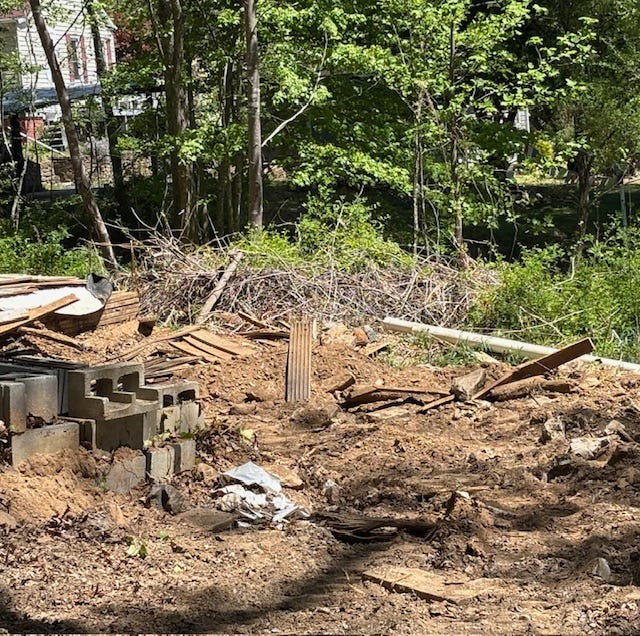
Now there’s another shipping container squatting, big and ugly, in place of the litter. I’ve come to call these steel giants “penis extenders” because the guys are so very fond of them. It looms above me on the ascending side of the mountain. I stare directly at it from the small deck I had built two and a half years ago when I bought this place. Summer won’t be so bad, as the brush and trees grow to help hide these monstrosities. The other six months of the year, October to April, they might as well be mine. I cannot avoid confronting them from every window and door on the west side of my house. The county does not seem to care that their own code reads “no shipping containers will be allowed to stand in a residential area.”
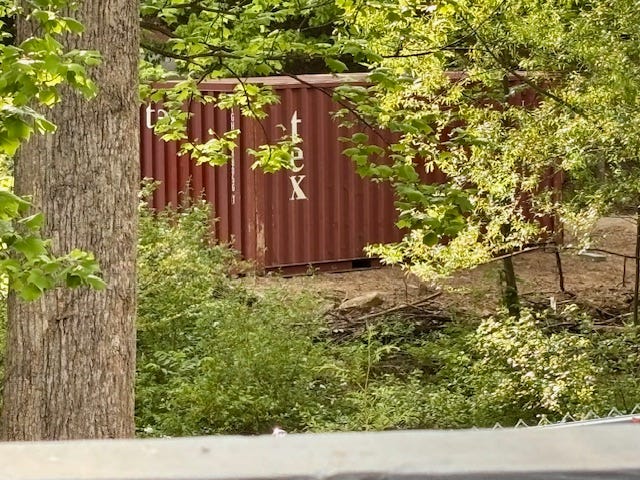
Swannanoa is called a “lo-res” area .There are 700 people on my small section of mountain. That’s not lo-res to a farm girl. I know the population count because, when the power goes out from one end of the block all the way up to the dead end of the mountain top, Duke Energy reports how many people are without power. I have not seen another shipping container in any nearby neighborhood, except for these two locations. Why are these individuals released from following county code? They know each other. I don’t believe they did not speak to one another about how lovely, how useful, a penis extender actually is. I realize this is the price I pay for speaking up. As surely as they exact retribution, I will continue to raise my voice in protest.
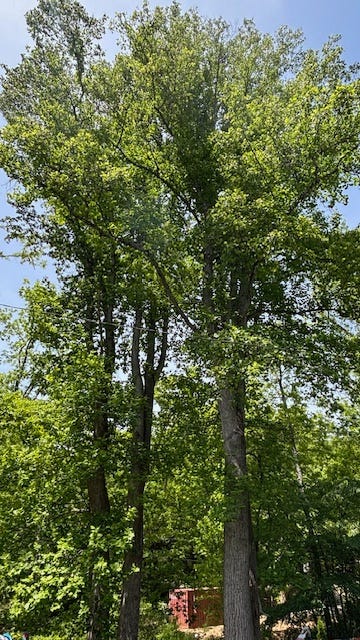
I counter these moves with green. I plant more trees, but the situation is a moving target. My green is met with junk stacked at the ends of the containers (as if they were not large enough to contain their stuff), and poison waste buried in the ground above my house. The contractor took his caterpillar and dug a huge trench from “his” road down past his penis extender straight into the creek. During Helene, my creek swelled with red mud as that road washed into the already roaring water, undercutting my bank and threatening to topple the giant tulip poplars I call “The Guardians.” It will be much worse for my place when it happens again.
Meanwhile I build soil around the trunks of my trees with weeds dug from planting and small sticks and grass collected from all over. I want to protect them as they protect me. This is a battle I fight alone. Not one person volunteers to make a call. The county will not, does not want to respond. The general feeling is, despite their private grumbling, we need to “go along to get along.” I absolutely refuse to follow this rule. My voice in these matters never wins me any popularity contests. Should I be afraid? Maybe, but I am 72 and a woman who is sickened by what humans continue to do to the only planet that is inhabitable to us. I have no children and no grandchildren, but I care about young folks’ futures more than their own fathers and grandfathers. I grow sick of the belief that money alone will take care of generations to come. I promise, cross my heart and hope to die, that it will not.
Despite the fact that both these men are much younger than I, have more money and assets than I am likely to ever have, and who have many more contacts to whom they can reach out to correct policy in their favor, I have proven a fierce green combatant. I do not cower and I, obviously, will not shut the fuck up. I do all I know to do, then go out and use my limited resources to combat their fear of losing; losing to a flood, losing to climate change, losing their own and their children’s futures, and losing always to their desperate need for more. They continue to seek revenge and think they are protecting themselves from that which they created, but can never control.
I have thought about moving. I still think about it. But where would I go? I feel too old to sacrifice another two years of life re-creating this little Eden I have grown around me, bordered as it is by penis extenders. Right here, on this ground I have learned to love the same way I learned to love my little house, by touching every square inch of my quarter acre. Here is a beauty and resilience that cannot be bought or sold for what it is worth. If this is the hill I die on, so be it.
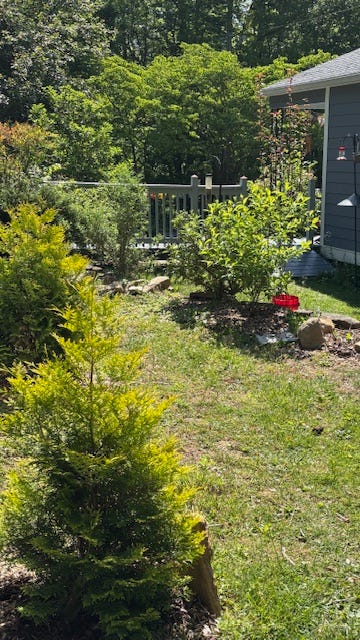
I am a descendant of Nordic Vikings; far distant, perhaps, but I feel that blood coursing through my veins. I do not back down. I will not give ground, and pay attention should I say, I will give no quarter. I take sides with the Earth. Her rebellion is my rebellion. My hands have loosened the roots of many of the trees that grip this soil so they can take nourishment. What money I have, I spend buying native trees and shrubs, watering, and amending the soil. I feed the birds and animals that thrive here. When times are good, the creatures and trees enliven me. When times are harsh, they breathe me peace. On this small plot of land, the plants and animals have as much, if not more, right to exist as any man. This land is my land, as Woody Guthrie sang. It could be your land, too, but first you must learn to love the land upon which you stand.
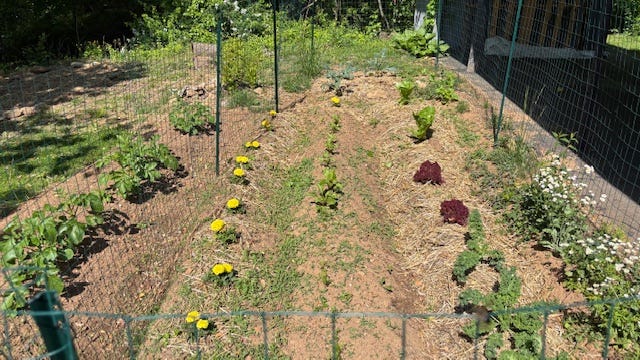
Reasons I stay:
Thank you for your patience in reading this publication today. It is not an easy read. I pray it reads like hope, like faith in what is larger than all of us. Be strong. Stand up. Like love, the Earth always wins in the end. Paying supporters, I appreciate you more than I have time to say. A special poem is on the way to you this week. Love, Mendy
It has been so dry that of course I am grateful for rain when we get it. I can’t forget, however, that a long dry spell preceded Helene. Those same untended and unmended river banks that speak of neglect by the county also speak to me of their threats. As much as homegrown “ Mitigation” threatens your neighbors and others, each situation for the sake of one man with less know-how than can-do, those unmitigated embankments speak of their threat of inevitable failure, no fault of their own, when the next disastrous storm strikes. And that is indeed, when not if. On a larger scale than your very accurate microcosm, men have been wreaking havoc for their own self interests with the results that the entire climate is reaching its predicted great potential for more frequent and more severe disasters. I have learned the wisdom of “no one is coming to save you“ in psychotherapy and management of the self. That’s a harder message for physical body and one’s own personal microhabitat. It makes me wish for the mind of a bird or a squirrel, a fox or a bobcat or a deer. A creature who dwells in the now and is not harboring any dread. Since Helene I harbor dread of nature. But that fear is misplaced. Nature is not responsible for the situation we find ourselves in. It was created very mindfully by the people who sat and the people who sit in boardrooms and behind corporate desks-/ yeah, then exclusively and still now mostly men, who have very deliberately chosen this for the rest of us.
Thank you for this beautiful, but painful, post. I often refer to chain saws, in the hands of certain men, as penis extenders. I recognize the phrase! We have 20 acres and yet have so many issues with neighbors, especially the curse of Meth. Sending you so much love. I hope we can come to NC and visit you some day.